
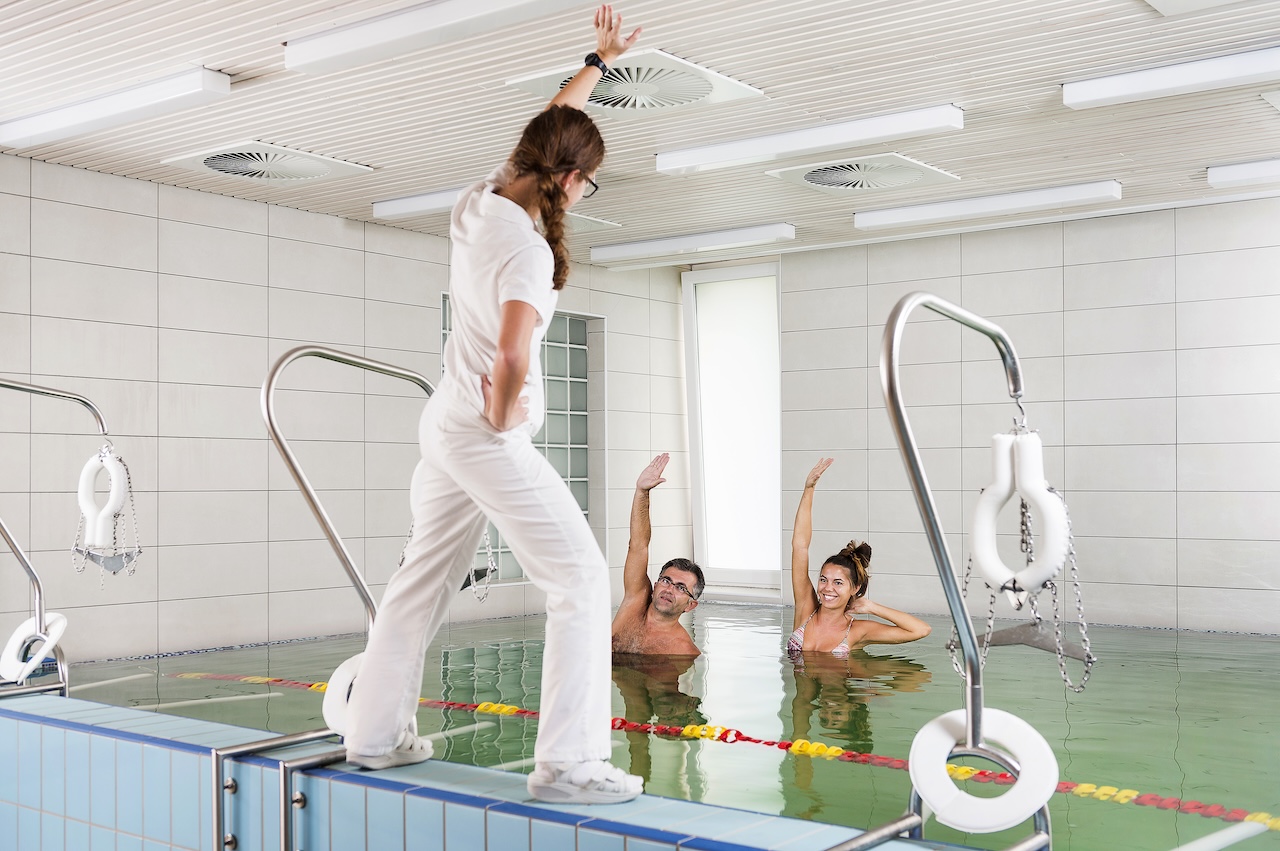
Víz alatti csoportos gyógytorna - (08)
Hatásmechanizmus:
A vízi torna a vízben történő mozgást jelenti. Igen népszerű, és rendkívül hatékony kezelési módszer.
A víznek, mint közegnek előnye, hogy a tér minden irányába szabadon lehet mozogni. Nem kell hozzá úszásismeret. Ugyanakkor fontos a megfelelő biztonság megteremtése. Mivel minden gyakorlat, mozgáselem a vízben történik, kihasználhatók azok a fizikai hatások, amelyek könnyítik (felhajtóerő miatt), vagy nehezítik (víz, mint közegellenállással szemben végeztetett gyakorlatok esetén) a mozgást ebben a közegben.
A víz specifikus hatásmechanizmusa a következőképpen alakul:
- A víz hőmérséklete (34+/- 2 fok) izomlazító hatású.
- A felhajtóerőnek köszönhetően vízbe merüléskor az izmok felszabadulnak tartófunkciójuk alól, amely ellazulást eredményez. Ez elősegítheti akár olyan mozdulatok, pozíciók kivitelezését is, amelyek szárazföldön már nem megoldhatók. Torna közben a felhajtóerő hatására csökken a vízben mozgó test súlya, így a mozgás nem terheli az ízületeket.
- A hidrosztatikai nyomás az anyagcsere folyamatokat befolyásolja így fokozódik a vénás keringés, és a kiválasztási funkció.
- A víz, mint közeg, ellenállást jelent, így izomerősítésre is használhatjuk. Az ellenállás olyan erőhatást jelent a víz alatti mozgás során, amely hatására javul az általános kondíció és a terhelési tolerancia.
A víz minden irányból körbeveszi a belemerülő testet, így megfelelő alátámasztást biztosít a nehezen mozgó beteg számára biztonságos környezetet.
A vízben történő mozgás hat a mozgatórendszer különböző részeire, a keringési-, légző-, és az idegrendszerre is.
Alkalmazási köre, ill. a gyakorlatok fajtája igen szerteágazó, használjuk mozgásterjedelem növelésére, izomerősítésre, erő-, állóképesség növelésére, koordináció javításra, keringés fokozására, általános kondíció javításra. A szárazon végzett torna hasznos kiegészítője lehet.
Kezelés menete:
A víz alatti torna foglalkozás felsőfokú szakképesítéssel rendelkező gyógytornászok irányításával kellemes hőmérsékletű vízben történik.
Időtartama:
25 perc.
Javallatok:
- Felső végtagi torna: vállat, könyököt, csuklót érintő baleset, törés, műtét utáni, vagy heveny / idült kopásos eredetű, beszűkült mozgással járó betegségek mozgásterjedelmének növelésére.
- gerinc-, alsó végtagi torna: gerinc-, és/vagy alsó végtag ízületeit (csípő, térd, boka) érintő kopásos megbetegedés, vagy ezen régiókat érintő ortopédiai-, idegsebészeti-, vagy baleseti műtétek utáni rehabilitáció részeként.
Ellenjavallatok:
- - Szív-, és keringési betegségek: Szívinfarktus után fél évenbelül, szívelégtelenség, gyógyszeres terápiára nem reagáló magas vérnyomás
- Visszérgyulladás,
- Pajzsmirigy túlműködés
- Epilepszia, Sclerosis multiplex
- Mozgásszervi megbetegedés gyulladásos fázisa
- Inkontinentia (széklet-, vizelettartás részleges, vagy teljes zavara)
- Vérzékenység, vérhigító szedése, menstruáció
- Daganatos megbetegedés után 5 évig, de azt követően is egyéni mérlegelés alapján
- Fertőző betegségek
- Nyílt sebek-, sérülések, fertőző bőrbetegségek
- Lázas állapot
- Terhesség